




















By Gurnam Singh | Opinion |
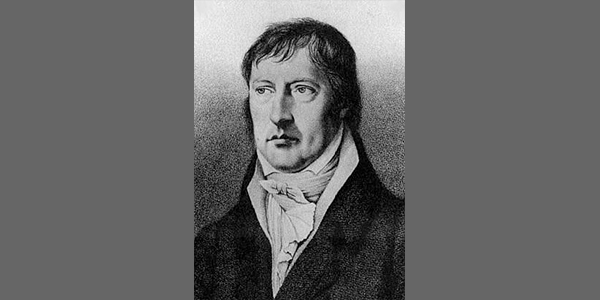
In a previous article entitled ‘The God of Einstein, Spinoza and Nanak‘ (Asia Samachar, 7 July 2021). I speculated about the similarities between Guru Nanak’s conception of God and that of the ideas of nature as a manifestation of the divine and the God of Spinoza. I pointed out that they do not see any distinction between creator, creation and the laws of nature, a perspective that is characterised as Pantheism. In this short piece, I turn to perhaps the most influential thinker of the European Enlightenment the German idealist philosopher Georg Wilhelm Friedrich Hegel and compare his thought with that of Guru Nanak.
Turning back to the previous article, in essence, I argued that, in contrast to traditional religious beliefs, both Nanak and Spinoza lead us away from the anthropomorphic concept of God. That is a God as a distinct being with human-like form, into something more abstract, to be found in the glorious manifestation of nature. However, an important distinction between this absolutist view held by Spinoza and Nanak’s spirituality is that, for Nanak, the divine can not be truly comprehended without breaking through the wall of the ego. In other words, to truly appreciate and experience the divinity of nature one must move beyond the material and enter the metaphysical realm of emotion, feeling and love or what Nanak terms ‘preeti‘.
Put in very simple terms, Hegel was impressed by Spinoza’s ideas about nature as manifesting God and his concept of the ‘Absolute’ fulfilled a similar function to Spinoza’s God of nature. Hegel claimed that truth or reality results from God’s thinking and that objects that appear to a spectator originate in God’s mind. Here Hegel formulates a concept of God as the product of the relationship between inner-self and ‘the independent totality’
In his major work The Phenomenology of Spirit he went on to trace the formation of self-consciousness through history and the importance of other people in the awakening of self-consciousness and the forward march towards enlightenment. Through his conception of the metaphysics of the evolving human spirit or the ‘Geist’, Hegel suggested that the universe is a gigantic evolving mind and in this regard alive!
For Hegel, the nature of human existence and progress is towards accumulating knowledge, is in some senses an expression of the divine. Taking the view that knowledge is power, Hegel argues that through each iteration in human history we become more powerful. In each life and lifetime, the collective sum of human knowledge leads us to the ultimate possibility of an all-knowing human existence. History then becomes understood as the retrospective account of the progression of humanity to the ultimate power of self-realisation. Put another way, we become the collective expression of an all-knowing, all-powerful humanity. In short through the process of self-realisation, we become God, and each human mind forms one small part of this bigger whole.
Because things that exist have a purpose, Hegel is seeking to articulate our purpose, as human beings. Just like acorns have a purpose to become trees, humans must have a purpose. And for Hegel, that purpose is to become self-conscious and self-aware. Interestingly, the name humans have selected to classify ourselves amongst the millions of species is ‘Homo sapiens’ meaning ‘wise human’. ‘Homo’ is the Latin word for ‘human’ or ‘man’ and ‘sapiens’ is derived from a Latin word that means ‘wise’ or ‘astute’. It follows that as we become more intellectually aware of our environment, our past, we are more able to contemplate our future
The ability to realise our existence, both subjectively and in the abstract, i.e. with a sense of time and place, is something unique to human beings. And the realisation of this purpose is something that constitutes a part of our nature. Just like the flowering of a plant is an expression of its nature, our nature is expressed through the flowering of our minds. This is manifest in any number of thoughtful and creative activities, of which language is central, but can include art, music, literature, poetry, philosophy, maths and science.
So, in summary, for Hegel, the ultimate purpose of human existence is in some senses to become all-knowing and powerful, i.e. to become a manifestation of the God of classical theism. The difference is that Hegel’s God is not separate from human existence but is the expression of the collective human mind, spirit of ‘Geist’.
Now if we turn to Guru Nanak’s philosophy of mind, human existence and spirit or if you like God, we see some interesting similarities. Like Hegel, Nanak holds human life forms in high regard, for the same reasons, namely that human existence offers one the possibility of self-reflection and self-consciousness. The difference is that, whereas for Hegel divinity is in some sense the realisation of one’s intellectual, rational abilities, for Nanak, the emphasis is on harnessing the power of the mind to connect with a bigger purpose.
Guru Nanak, though interested in metaphysics and ideas, unlike Hegel, begins with a very practical challenge of the ethics of living. He proclaimed that though the pursuit of ‘truth is a noble cause, the ultimate purpose of human existence is truthful living. Whilst affirming the importance of truth as knowledge, here Nanak is emphasising the greater importance of practical wisdom. Accordingly, his philosophy can be understood as a praxis, that is a unity of thought and action with a telos towards a fuller realisation of our human potential as we evolve.
For Nanak, the unique power of human existence is our capacity to listen, observe, think, feel, reason and act. But most crucially, it is in realising our moral purpose, characterised in terms of divine thought and action, that we can truly realise our divine spiritual purpose. The following two extracts from Gurbani point towards this proposition:
“O mind, you are the manifestation of the divine light, your purpose it to realise your divine purpose”
“Through the gift of the human form, you have the possibility of uniting with the universal divine spirit
And so to conclude, if for Hegel the ultimate end game for human history and evolution is that the collective evolved human spirit or Geist becomes the manifestation of God, for Nanak, one doesn’t have to wait for the end of times. In his conception of a divine-human spirit or ‘paramatma‘ that transcends time and space, the point of human existence is to connect, emotionally or if you like at the metaphysical (nirgun) level, and materially in the physical world (sargun). How one connects is through serving and reflection. As Nanak says, by realising one’s purpose is to serve in the world, one secures a connection with the divine.

Gurnam Singh is an academic activist dedicated to human rights, liberty, equality, social and environmental justice. He is an Associate Professor of Sociology at University of Warwick, UK. He can be contacted at Gurnam.singh.1@warwick.ac.uk
* This is the opinion of the writer and does not necessarily represent the views of Asia Samachar.
RELATED STORY:
The God of Einstein, Spinoza and Nanak (Asia Samachar, 7 July 2021)
Towards a more loving, sharing and caring world in 2021 (Asia Samachar, 22 Dec 2020)
ASIA SAMACHAR is an online newspaper for Sikhs / Punjabis in Southeast Asia and beyond.Facebook | WhatsApp +6017-335-1399 | Email: editor@asiasamachar.com | Twitter | Instagram | Obituary announcements, click here |