














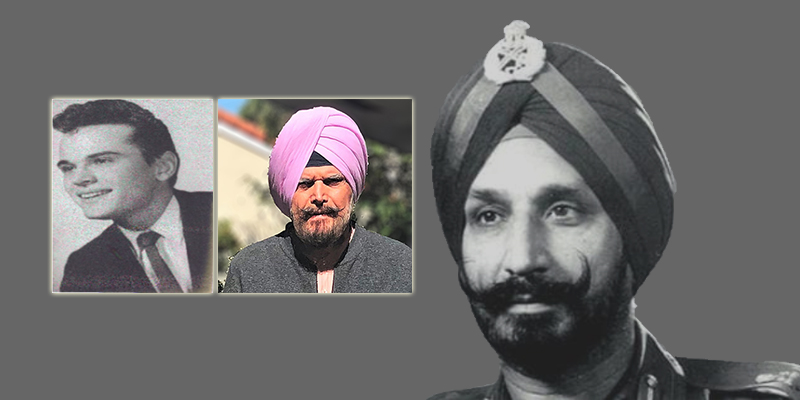
By Franklin Paul Tarney | Experience | United States |
As a young man, I thought that only other people age and need glasses and get gray hair. I knew intellectually that no one lives forever, but emotionally I thought that I would be the exception! In this essay I will discuss some injustices that I experienced both in and after the military. However, I always remind myself of a buddy from my platoon in Vietnam who returned home only to be physically abused by his drug-addicted son. When that son died of an overdose, the grandson began to abuse him and take advantage of him financially. It is easy to say from a distance that one should not accept this ill treatment, but when it is family, the situation changes. Regardless of unfairness to me in life, there are veterans far worse off.
One of the few times that my Dad was ever wrong was when he said that if I left college, I would never go back – I did go back after Vietnam. I was directionless in college and joined the Marines for discipline and adventure. When I arrived at Marine boot camp – Parris Island, South Carolina in 1965 – I was as much a mystery to myself as the military was to me.
After boot camp, in California, prior my unit’s departure for Vietnam, I was assigned to attend a Vietnam language class. The first person offered this opportunity, was a corporal, who did not want to do it. He thought it would interfere with his “liberty” – his free time. No one else was interested because it involved academics – class work. I worked hard in this class and became fairly fluent in Vietnamese. I was assigned to another Vietnamese language class in Okinawa. Upon arrival in Vietnam, I had so many more opportunities to speak the language and become even more fluent.
Soon, I was attached as an interpreter to a medical outreach program to Vietnamese villagers. I found myself working with Navy physicians and corpsmen (Navy medics) which caused great resentment in my platoon. Their view was that I was a lowly enlisted man like them so why was I interacting with officers in the Navy. The outcome was that the very corporal who turned down the language school opportunity now gave me twice the amount of guard duty as anyone else in my platoon. I had perimeter guard duty every other night. During the day, my language skills assisted in the building of a children’s hospital. Once, I dozed off on guard duty. I managed to get a transfer to a reconnaissance unit after I threatened to write my Dad and ask him to contact our local congressman in New York about my plight. In the recon unit, I became a prisoner-of-war interrogator – quite a transition from interpreting for a medical program and starting a hospital for children. Interpreting for a medical program for Vietnamese villagers made me feel like I was in the Peace Corps. As a P.O.W. Interrogator, I felt like a Gestapo agent.
I returned from the Vietnam War to a polarized country – as it is today. However, back then it was between pro-war and anti-war factions. We came home and were seen by some as war criminals. I had the residual ill effects of exposure to Agent Orange as well as Post-Traumatic Stress Disorder (PTSD) issues. Two acts of real courage gave me inspiration and mitigated my PTSD. One, from my war in Vietnam, but an earlier one from the French in Indochina. First, while in battle in Vietnam – in a position being overrun by the enemy – a radio operator was calling for reinforcements. At that time, back home, there was a cartoon commercial on TV for a breakfast cereal, “Krispy Critters.” A kid would open the cereal box and cartoon animals would come stampeding out of it: elephants, giraffes, lions, tigers, and others. The radio operator shouted into his phone, “They’re on us like Crispy Critters!” Marines were subjected to satchel charges and automatic rifle fire, and yet, they all laughed!
The second source of inspiration for me derived from the French defeat at The Battle of Dien Bien Phu in 1954, which led to America replacing the French in Vietnam. The battle was clearly lost and yet, some Frenchmen still volunteered to parachute into the fight. Some of these volunteers were making their first parachute jump with no prior jump training whatsoever and they jumped at night amidst heavy anti-aircraft fire. I never forgot this and it helped me to focus on an instance of great courage. The phrase “baptism by fire” is often used too casually, such as applied to a person with a new job. This was a soldier’s first time in battle – even if one landed on the ground unscathed – these volunteers were then subjected to mortar and machine gun fire. This story of valor in a lost cause was and continues to be an inspiration for me.
After the war, when I arrived at graduate school, I had a meeting with a professor. He told me he was a WWII veteran who fought in Europe with General Patton. He then said to me, “One day I’ll tell you about a REAL war!”
Demoralized for a time after my return, I happened to learn of the war in 1971 between India and Pakistan over what was East Pakistan, which, after the Indian victory, became Bangladesh. Every night, a Sikh general in the Indian Army would give a TV press briefing here in America. Yes, his turban, long beard, and handlebar mustache were striking, but it was his self-confidence, coupled with no pretentiousness, and impeccable English that also impressed me. India was winning this war, but there was no vanity in General Aurora’s briefings.
Most people who convert to another faith do so for spiritual reasons. In my case, what initially attracted me to the Sikh faith had little to do with spirituality. I was an admirer of the military heritage of the Sikhs. Sikhs became known as “saint-soldiers” given their willingness to resist oppression – be it against themselves or others. The Sikh religion began in India about 500 years ago. Sikhs are neither Hindus nor Muslims. Sikhs believe that one God unites all mankind. Sikhism boils down to three simple practices: humility, forgiveness, and kindness. Good actions are of central importance in the Sikh faith. All human beings are equal and this includes women. I did a lot of research on the military history of the Sikhs and thereby came to appreciate their spirituality. Wearing a turban to cover one’s uncut hair became important to me. The essence of the Sikh faith is transformation.
Judaeo-Christianity worked for my parents. My mother was a devout Roman Catholic. My Dad had a Jewish background from Latvia. When my mother could no longer live on her own in New York City, she came to lived with my wife and me in Florida. She was 94 years old and lived another four years. I told her that if she wanted to go to church on Sundays, I would arrange for her to be picked up, driven to the church of her choice and returned home. She told me that she wanted to worship at the Sikh temple where I worship. Music is central to Sikh worship and Mom was able to read the English translation of our hymns on projected on a screen. She said her prayers in English and Italian and we Sikhs believe that God is multi-lingual.
On the drive taking Mom for the first time to our temple, I explained to her the central importance of the communal meal, called the Langar, which is mandatory after every Sikh religious service. All people, regardless of race or creed are welcomed to partake. As we pulled into a space at the temple parking lot, Mom turned to me and said, “When do we eat?”
Sikhs, both men and some women, are proud to wear the turban, but there are times when they are quite willing to remove it. Many a drowning person has been rescued by a Sikh removing his turban and using it as a lifeline. In 2008, terrorists from Pakistan attacked various places in Mumbai, India including luxury hotels. They also targeted two hospitals, a popular cafe, and a theater. They were looking particularly for foreigners. Almost two hundred innocent people were killed as well as nine of ten of the attackers. There was a turbaned Sikh worker at one of the hotels who was helping shelter some very frightened guests during this terrorist attack. Because of his turban, one English lady thought he, too, was a terrorist. He told her in a very gentle voice that he would remove his turban if that would make her feel better and more secure. She was so comforted by his words, that she told him that he did not have to take his turban off. General Aurora, my initial inspiration in becoming a Sikh, during the 1971 war with Pakistan, is said to have done something amazing and compassionate. True, this is an apocryphal story, but illustrates the Sikh ideal. The General, with his Indian troops, took over an internment camp in which there were many local Bengali women who had been abused by some members of the Pakistani Army. Many of these young women were almost naked. General Aurora removed his turban, tore it into segments and gave them to as many women as possible so they could cover themselves as best they could.
Among the saddest, heartbreaking experiences of my life is being at a supermarket or department store and having people shout out at me “Taliban” or “Osama bin Laden” or “Go back to Arabia!” I was born and raised in New York City and my mother was born in Italy. Yet, when I go to the gym wearing a U.S. Marine Corps bandanna, people come up to me thanking me for my service and welcoming me back home – 50 years later. I suspect that some of those appreciative people at the gym would also shout “Taliban!”
Was I in a war 50 years ago, or as it yesterday? My wife once asked me if I could relive my life, would I have joined the military again. I said, “In a heartbeat!”

Franklin Paul Tarney [a.k.a. Fatehpal Singh Tarney], an ex-Marine of Vietnam era, has been a Sikh for over 40 years. He was very demoralized after the Vietnam War, but Lt. Gen. Jagjit Singh Aurora and his leadership in the 1971 Indo-Pakistani war stimulated by interest in Sikhi. He is proud to be one of the few Western Sikhs to have been president of a predominantly Punjabi Sadh Sangat. A retired history teacher and coach of tennis, soccer, and lacrosse, Tarney is actively involved in interfaith programs in Florida and Michigan.
RELATED STORY:
Marine Corp claims beards put lives at risk. This is nonsense, says ex-Marine (Asia Samachar, 15 April 2022)
ASIA SAMACHAR is an online newspaper for Sikhs / Punjabis in Southeast Asia and beyond.Facebook | WhatsApp +6017-335-1399 | Email: asia.samachar@gmail.com | Twitter | Instagram | Obituary announcements, click here