




















By Asia Samachar | Panjab |
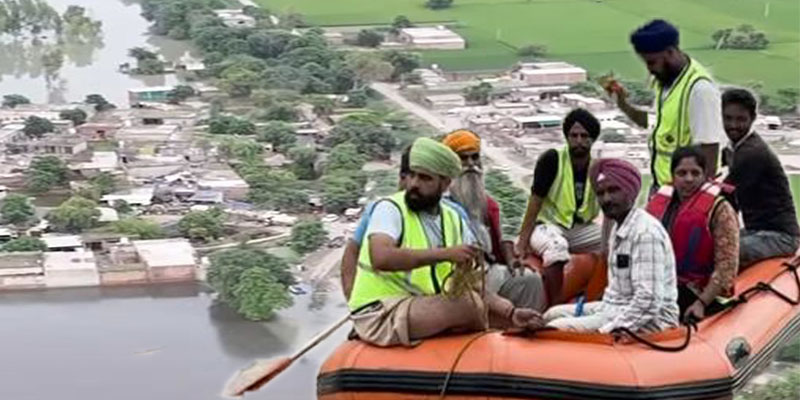
The devastating floods sweeping through Punjab this year are increasingly being described not only as a natural calamity but also as a man-made tragedy. Experts and local leaders argue that poor infrastructure planning, drainage obstructions, and mismanagement of dam releases have compounded the crisis, leaving towns, villages and agricultural lands submerged for weeks.
A major culprit is the obstruction of surface water flow. The NITI Aayog’s 2021-26 flood management report had already warned that poor drainage and embankments worsen flooding in states including Punjab.
Despite this, elevated highways and insufficient culverts have created barriers that trap floodwaters in fields and settlements, reported Down To Earth, an environment portal with a print magazine produced forthrightly.
The Parliamentary Committee on Agriculture, Animal Husbandry and Food Processing, chaired by former Punjab chief minister Charanjit Singh Channi, has flagged highways as a key factor. On September 2, it summoned officials from the National Highways Authority of India (NHAI) to explain why proper drainage was not incorporated in road projects.
Local MP Sukhjinder Singh Randhawa has accused NHAI of negligence, particularly along the Kartarpur Corridor, where a three-kilometre highway stretch lacks culverts. Residents told the state governor that waterlogging there could have been avoided with basic drainage infrastructure.
Earlier, a Public Works Department survey identified 346 spots across Punjab’s highways where drainage had been blocked. Activists note that elevated highways running northeast to southwest act like “water walls”, preventing rainwater from dispersing. Past floods, such as those in Muktsar in 2013, similarly destroyed thousands of acres due to blocked canals and drains.
The role of agriculture also complicates the crisis. Floodwaters sit stagnant in paddy fields, where compacted soil layers slow natural absorption. Combined with heavy monsoon downpours—rainfall in August was 74% above normal, with Gurdaspur and Pathankot seeing up to 181% excess rain—this has created widespread waterlogging.
At the same time, dam management has come under fire. Water releases from the Bhakra and Pong dams during peak flooding overwhelmed already saturated districts like Rupnagar and Amritsar. Randhawa, in a letter to Prime Minister Narendra Modi, criticised outdated infrastructure such as manually operated gates at the Madhopur barrage, which collapsed under extreme flows.
Experts warn that Punjab’s flood risk is amplified by encroachment on floodplains, illegal sand mining, silted rivers, and the destruction of wetlands and village ponds. Policy reforms—ranging from stricter floodplain protection to transparent dam release protocols and modern early-warning systems—are seen as essential.
As Vishnu P of humanitarian group Sphere India noted, “Only through integrated planning, climate adaptation and accountability of agencies can Punjab protect its people and agricultural economy from recurring tragedies.”
RELATED STORY:
Impact of floods due to lack of Indian environmental planning (Asia Samachar, 13 September 2025)
ASIA SAMACHAR is an online newspaper for Sikhs / Punjabis in Southeast Asia and beyond. You can leave your comments at our website, Facebook, Twitter, and Instagram. We will delete comments we deem offensive or potentially libelous. You can reach us via WhatsApp +6017-335-1399 or email: asia.samachar@gmail.com. For obituary announcements, click here